The look, voice, and vocabulary of thinqOS.
thinqOS is the cognitive layer for AI: a digital mind for every identity, human and agent. These are the rules that keep it looking and sounding like one product.
The mark
The lockup pairs the cognitive mark, a glassy brain threaded with copper neural traces, with the thinqOS wordmark. Use it on deep, dark backgrounds for the most legibility. Keep clear space around it equal to the height of the wordmark, and never recolor, outline, or stretch it.

Three approved variants cover every placement: the full lockup for headers and footers, the mark alone where space is tight, and the app icon for platform surfaces that require a square glyph.
Full lockup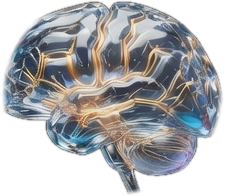 Mark only
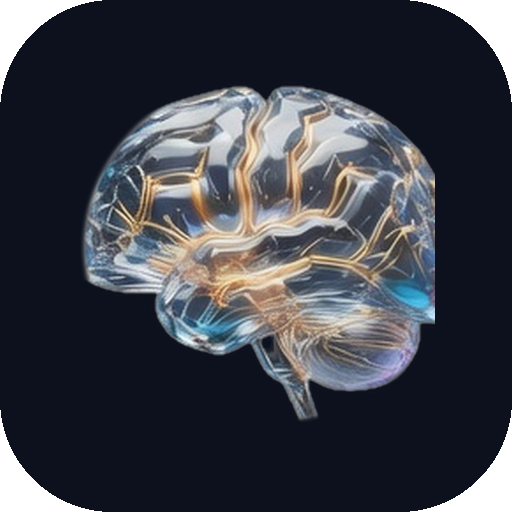 App icon
A few ways the mark gets misused. Don't recolor it, don't stretch it, and don't drop it on a light background: the glass and copper only read on the dark canvas.
RecoloredStretchedOn light backgroundOne line, said one way
The category line is "The cognitive layer for AI." Use it as the positioning everywhere it does that job: titles, social cards, the footer. The definition that follows it is "a digital mind for every identity, human and agent."
The hero pattern is two sentences in order. The first names the problem, the second delivers the payoff: "A memory system can find facts. A Mind knows which facts, goals, boundaries, and relationships matter for the task in front of it." Diagnose, then resolve.
The continuity line is "the same mind across your tools, models, and sessions," in that order. It describes one identity carrying one mind across its own surfaces, a different claim from sharing between identities. See the two axes entry in the vocabulary.
A dark canvas, cyan and violet, copper for the mind
The palette is a near-black canvas with cyan and violet accents. Copper appears only in the cognitive mark and the living-mind visual, echoing the brain's neural traces. Keep accents sparing. The dark is the brand.
The cyan-to-violet gradient is the primary accent treatment, used on the wordmark's "OS," primary buttons, and key highlights.
Bricolage Grotesque, IBM Plex Sans, IBM Plex Mono
Bricolage Grotesque sets display and headlines. IBM Plex Sans carries body copy, usually at a light weight. IBM Plex Mono marks eyebrows, labels, and code. All three load from Google Fonts.
How thinqOS sounds
The words we use the same way every time
These are the load-bearing terms of the category. Use them consistently across the site, the docs, and in-product copy.
- cognitive layerThe layer above every model and tool, where durable context becomes task-sensitive attention. The category thinqOS defines.
- digital mindWhat thinqOS gives each identity: durable memory, evidence, and the continuity to act on it.
- MindThe durable runtime construct: one shared world of facts, with many minds each holding their own evaluation of it. Turn-specific context is an overlay unless it is promoted into the Mind.
- beliefA claim that carries confidence, a source, and decay, not a flat note.
- shared worldFacts held once. Each identity keeps its own perspective on them, never its own copy.
- federationMany bounded minds cooperating, never one mind that holds everything.
- identityA human or an agent. Each gets its own mind, isolated by default.
- two axesAcross identities, each gets its own mind and only a shared world of facts is held in common, never a shared copy. Across one identity's own tools, models, and machines, it is one continuous mind. "Shared across your tools" is that second axis, and it is correct, not a contradiction.
- extract, attend, consolidate, decayThe loop verbs. Use them consistently in toasts, activity feeds, and docs.
- Live, PlannedStatus labels that separate what ships today from what is designed but not yet built. Never write a Planned capability in the present tense: say "Planned: it will," not "it does."
Quiet structure, deliberate movement
Reading content sits in a 720px column. Full-width sections cap at 1200px, widening to 1240px on very large screens. Generous dark space does the framing.
Motion is slow and deliberate, never snappy, because the Mind is persistent, not reactive. Everything that animates respects prefers-reduced-motion and resolves to a clean static state.